Understanding Generative AI: How it Works
Generative AI is a type of artificial intelligence that creates new content—such as text, images, music, or even videos—by analyzing patterns in existing data. Unlike traditional AI, which follows strict programming rules to solve problems, generative AI learns from large datasets and uses that knowledge to produce original outputs.
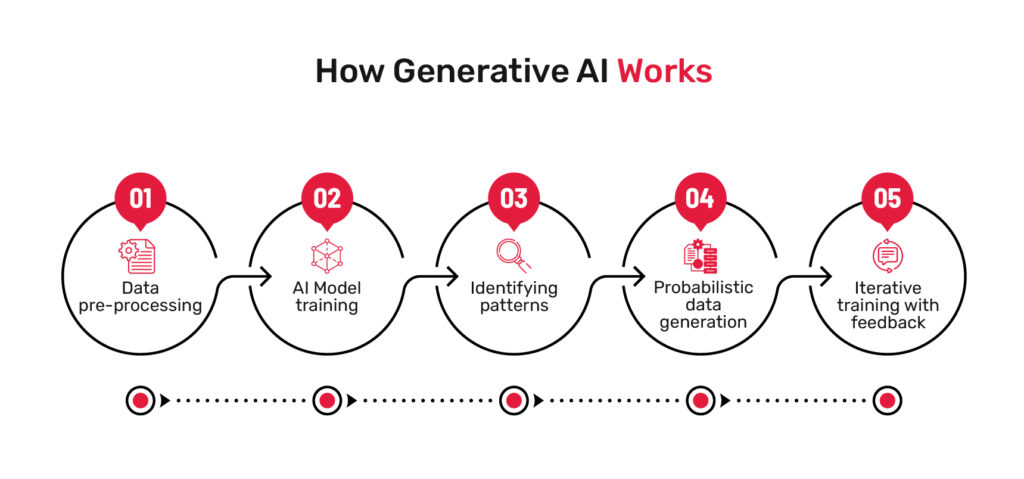
At its core, generative AI operates by analyzing patterns in data and predicting what comes next in a given sequence. For example, when you enter a prompt into a language model like ChatGPT, it generates text by determining the most likely sequence of words based on its training data, producing responses that mimic natural human communication. Similarly, image generation models like DALL·E process vast collections of images to create entirely new, original visuals based on descriptive text inputs.
Generative AI is changing how we work, learn, and create. It helps automate repetitive tasks, speeds up creative processes, and allows anyone—regardless of skill level—to generate professional-quality content. However, it also raises questions about authenticity, ethics, and its impact on jobs, making it important to understand both its potential opportunities and challenges.